VANCOUVER
ST.
MARY'S KERRISDALE
2490 West 37th Avenue
· Vancouver
·
www.stmaryskerrisdale.ca
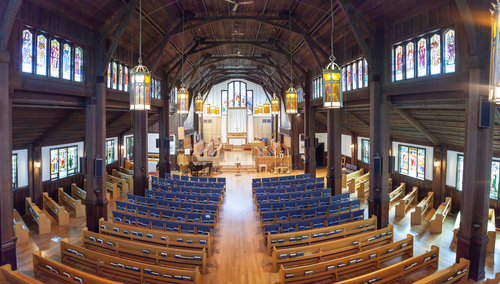 St.
St. Mary's Kerrisdale St.
St. Mary's Kerrisdale
Suggested Donation:
$20 to $30
(a free will offering - everyone
welcome)
•
18
and under FREE •
All
concerts at 7:00 PM
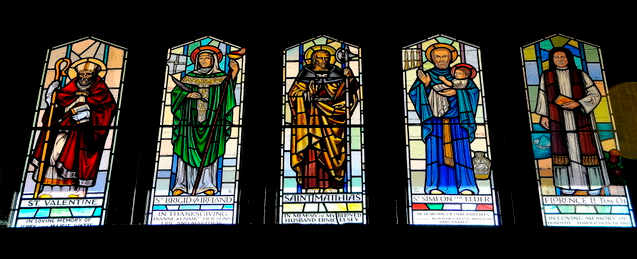
Stained
glass at St. Mary's
The
Salish Sea Early Music Festival is a
501(c)3 organization and all donations are
fully tax deductible in accordance with
the law. Your donations are welcomed at
https://www.salishseafestival.org/donate .
✣
Presented in collaboration with
St Mary's Kerrisdale Church
✣
|
2026
Salish Sea Early Music Festival in Vancouver
~
Period Instrument chamber music from six centuries
in Vancouver and around the Salish Sea ~
~ Presented in
collaboration with St. Mary's Kerrisdale ~
PLEASE CHECK BACK FOR
2027
❇ We'll start in January
❇
~
All concerts at 7:00 PM
★ download 2026 flyer here
~
~
Earlier concerts this 2026
season
~
|
Tuesday,
January 20, 2026 at 7:00
PM:
 —
A
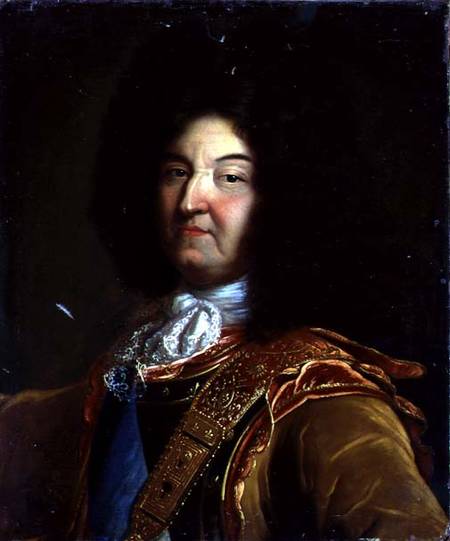
LITTLE CONCERT FOR LOUIS
XIV —
A
LITTLE CONCERT FOR LOUIS
XIV
· Y Hsuan
(Ethan) Lin,
baroque violin
· Vicki
Gunn,
baroque viola
· Jeffrey
Cohan,
baroque flute
· Anna
Marsh,
baroque bassoon
André
Danican Philidor
l'ainé, the
aging Louis XIV's
long-time music
librarian, prepared the
king's favorite
operas and ballets
alongside chamber
music by Lully and
Philidor himself
for little evening
concerts given before
his majesty, all reduced
for a smaller number of
musicians who presented
these grand works in the
intimate setting greatly
preferred during this
period by the king, at
least a quarter of a
century after the death
of the composer of most
of these works,
Jean-Baptiste Lully.
★
★
★
|
|
Tuesday,
February 17, 2026 at 7:00
PM:
— The
ITALIAN and FRENCH
PERSPECTIVE
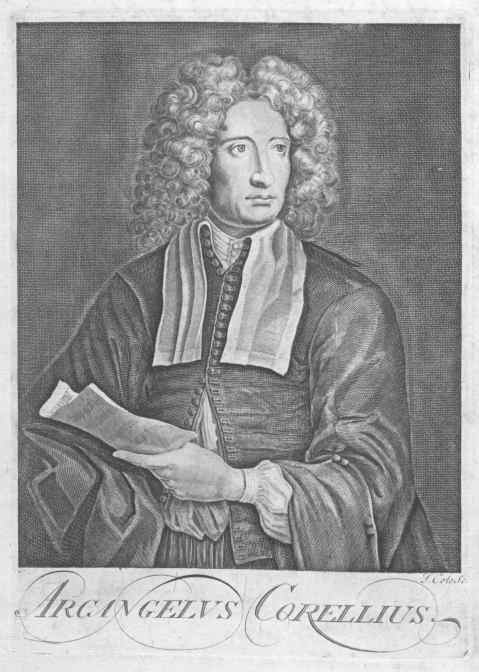 · Susie Napper
(Montreal), viola da gamba
· Susie Napper
(Montreal), viola da gamba
· Olena Zhukova
(Kyiv, Ukraine),
harpsichord
· Mélisande
Corriveau
(Montreal), treble viol
· Jeffrey Cohan,
renaissance &
baroque flutes
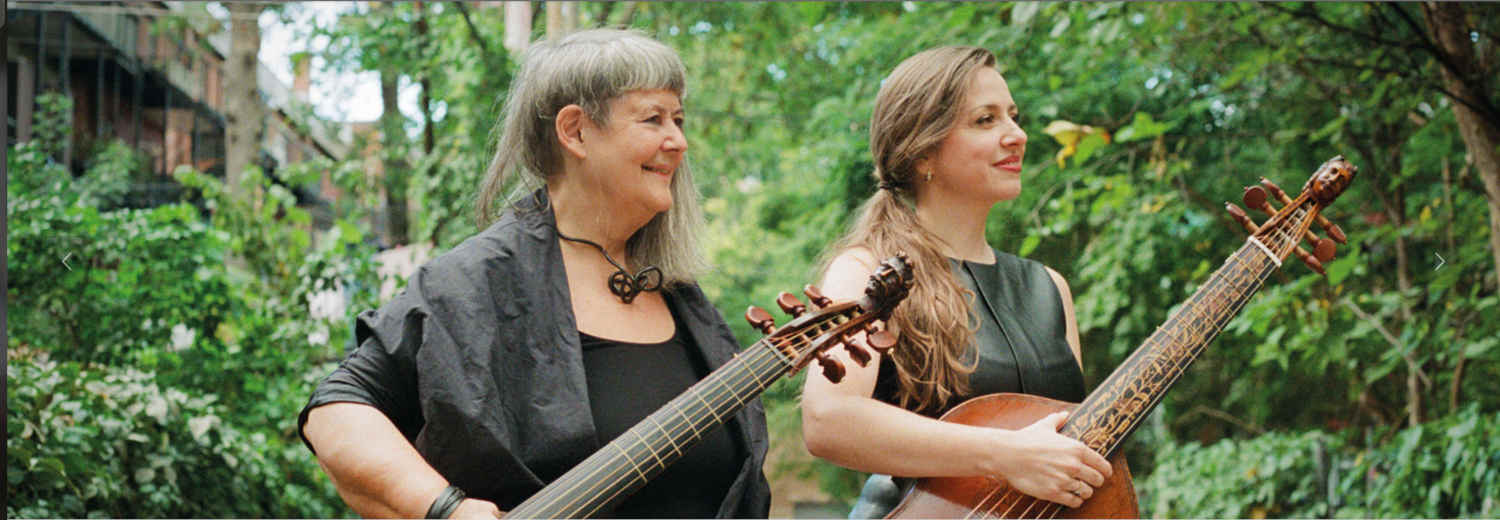
Olena Zhukova from Kyiv
and Les Voix humaines,
the widely celebrated
prize-winning duo of
viols from Montreal join
us for a program
illuminating a radically
evolving musical
perspective through the
17th century.
LISTEN:
Les Voix Humaines
plays
|
CANCELLED:
 Friday,
February 27, 2026 at 7:00
PM: Friday,
February 27, 2026 at 7:00
PM:
— EUROPEAN
TOUR 1690-1790
· Olena
Zhukova,
harpsichord
· Jeffrey
Cohan, baroque
flute
We
deeply regret cancelling
this performance due to a
Canada visitor visa issue
and very much look forward
to Ms. Zhukova's
performances with us next
year.
An
excursion through a century
of transformation and
diversity by decade and
culture within the baroque
and classical periods,
through the perspective of
composers for harpsichord
and flute from
Ukraine,
France, Italy, Scotland,
Germany and Austria with
music by Berezofzkyj,
Boismortier, Corelli,
Oswald, Mozart and Bach.
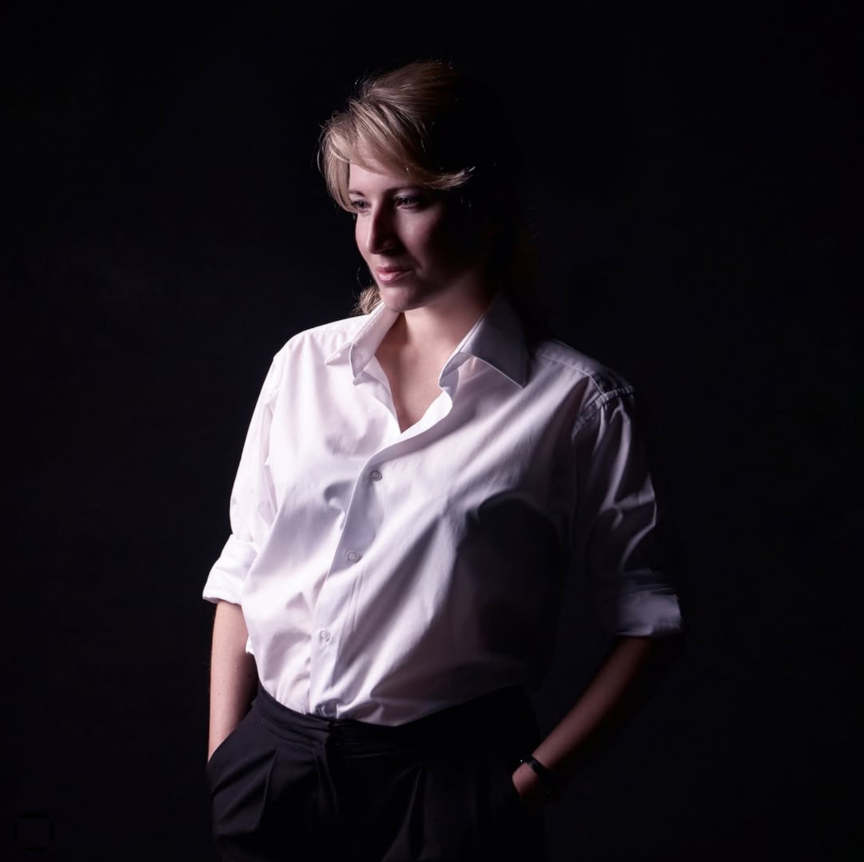
Olena Zhukova
of Kyiv, Ukraine, a
leading harpsichordist
and a tireless
ambassador for
early music in her
country and abroad,
has performed since
the outbreak of
full-scale war in
prominent performances
sponsored by
distinguished
institutions all
around Ukraine,
Poland, Austria,
France, Switzerland
and Czech Republic for
international
festivals and in
collaboration with
major artists,
orchestras and opera
productions. Ms.
Zhukova is also an
accomplished scholar
who published and
presented more than 20
articles, while
devoting herself to
her harpsichord class
and chamber music
students as Associate
Professor at both the
National Music
Academy of Ukraine
and the Gliére
Academy of Music
(Kiev), where she
founded the
harpsichord class.
Recent engagements
during the past few
months alone include
Bach's Goldberg
Variations in the
prestigious Organ
Hall in Lviv,
Ukraine; the first
major classical
performance for the
public in Chernihiv,
Ukraine since
the outbreak of war
entitled French
Music in Times
of War
and sponsored by the
Ambassador of France,
in a newly rebuilt
performance hall in
Chernihiv that had
previously been
extensively damaged by
a Russian strike at
the beginning of the
conflict; and an
involved program,
consisting exclusively
of new music for
harpsichord composed
in part for
her by today's
Ukrainian composers,
for Columbia
University’s Global
Center in Paris
and its Institute
for Ideas and
Imagination.
★
★
★
|
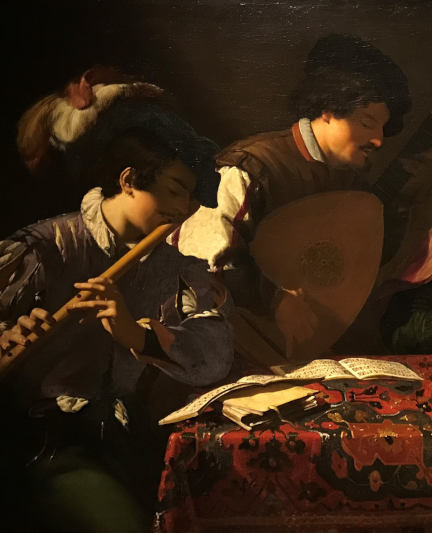
Tuesday,
March
24, 2026
at 7:00
PM:
—FOLK
SONG FROM THREE
CENTURIES II
Renaissance
Psalms, Scottish Baroque
& Folk
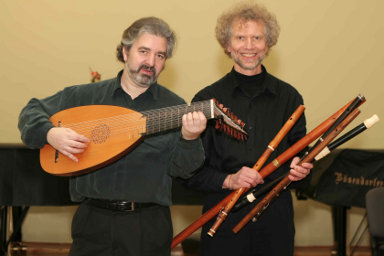
· Oleg
Timofeyev,
renaissance lute, English
guitar & 7-string
guitar (1820)
· Jeffrey
Cohan,
renaissance, baroque &
8-keyed flutes (London,
1820)
Innovative
renditions of renaissance
Psalms (~1620), Irish and
Scottish baroque (~1720)
and folk music as
interpreted during
Beethoven's lifetime
(~1820) outlines this 100%
new program continuing
Oleg and Jeffrey's
exploration of settings
from three centuries of
popular and folk music,
performed on 5 transverse
flutes and three plucked
instruments.
Two experiments in
particular are worth of
mention. In the early 17th
century Flutist Jacob Van
Eyck and lutenist Nicolas
Vallet both wrote settings
of many of the Psalm tunes
from the Geneva Psalter of
the mid-16th century.
Timofreyev and Cohan
juxtapose these in a
manner that sheds new
light on early
17th-century
improvisational practice.
James Oswald's "Airs for
the Seasons" consists of
four collections, one for
each season, of about 24
airs or multi-movement
suites, each dedicated to
a particular flower of the
season and radiating the
charming character of the
folk melodies of Oswald's
native Scotland. The wire
strung English guitar, so
rarely to be heard today,
emerged around this time
as one of the most
prominent instruments of
home life in England, and
Oswald's airs beautifully
suit Oleg's instrument
made in 1767 alongside the
one-keyed baroque flute.
LISTEN:
Oleg
Timofeyev and Jeffrey
Cohan play Drouet's God
Save the Queen on
SoundCloud:
★
★ ★
|
Friday,
April
24, 2026
at 7:00
PM:
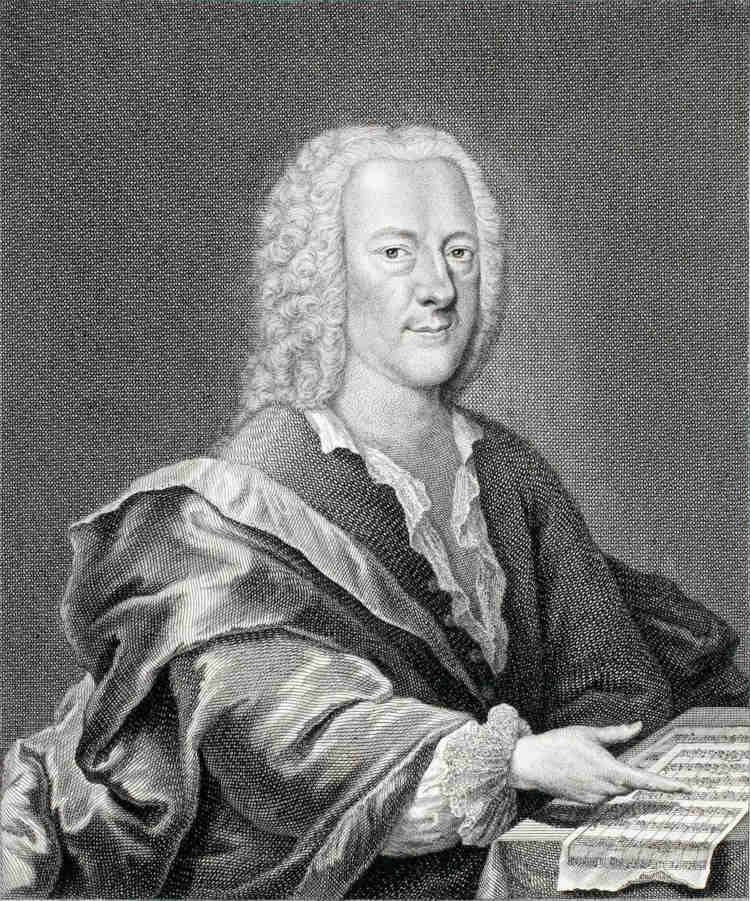
—TELEMANN
PARIS QUARTETS
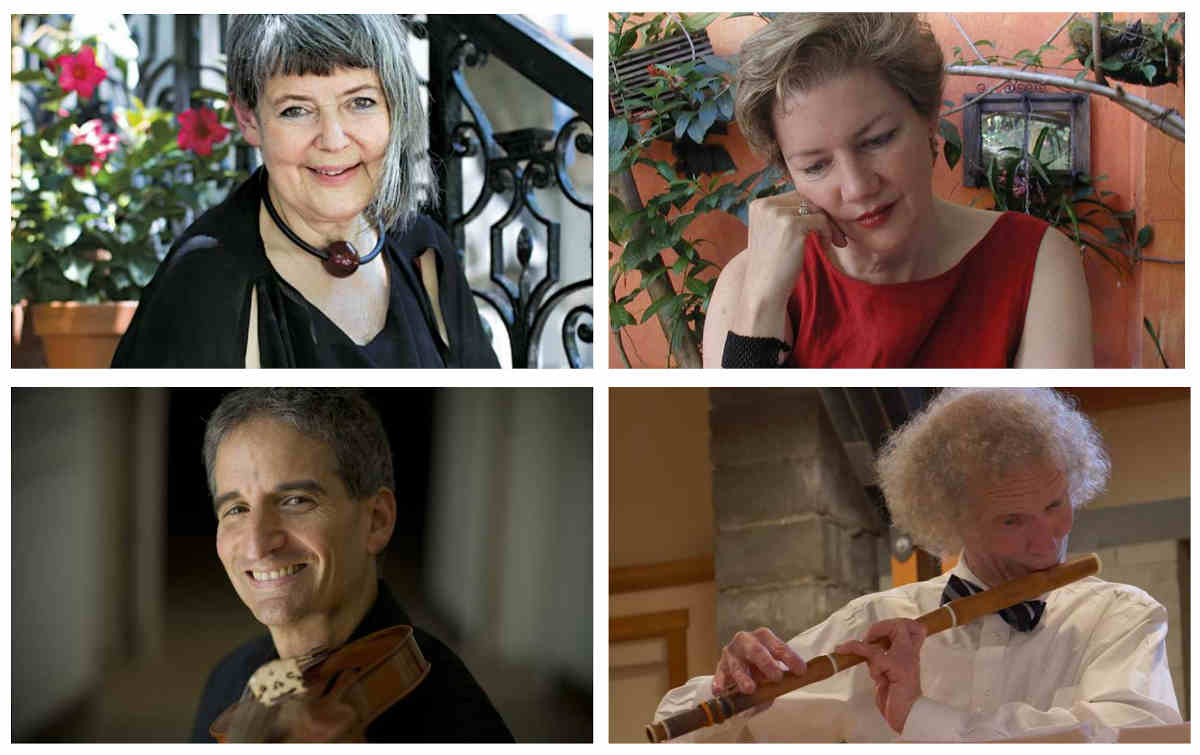
· David
Greenberg,
baroque violin
· Susie
Napper,
viola da gamba
· Elisabeth
Wright,
harpsichord
· Jeffrey
Cohan,
baroque flute
Six
quatuors
(1730):
Concerto
1 in G
Sonata
1 in A
Suite
1 in e
Nouveaux
quatuors en six
suites (1738):
2e.
Quatuor in A Minor
Telemann composed his
12 brilliant “Paris
Quartets” in Hamburg
and then Paris in
response to a request
in 1730 from the most
famous Parisian flute,
violin and cello
virtuosi which
resulted in his most
significant journey
away from home during
his lifetime. This
year we present four
new quartets, to
include a selection
from each of his four
sets of quartets in
sonata, suite and
concerto format.
"The admirable
performances of these
quartets by Messrs
Blavet (transverse
flute), Guignon
(violin), the younger
Forcroy [i.e. Forqueray]
(viola da gamba) and
Edouard (cello) would be
worth describing were it
possible for words to be
found to do them
justice. In short, they
won the attention of the
ears of the court and
the town, and procured
for me in a very little
time an almost universal
renown and increased
esteem."
|
Tueday,
May
12, 2026
at 7:00
PM:
—BACH
& HANDEL
·
Maike
Albrecht,
soprano
·
Hans-Jürgen
Schnoor,
harpsichord
·
Susie Napper
(Montreal), viola da
gamba
· Jeffrey
Cohan,
baroque flute
Vocal masterworks to
be presented include 6
of Handel's 9 exquisite
German Arias,
selected arias from
cantatas by Bach, his
Italian Concerto
for solo harpsichord,
and flute sonata by
Handel and Bach's
cantata Ich habe
genug.
|
 Tuesday,
June
9, 2026
at 7:00
PM: Tuesday,
June
9, 2026
at 7:00
PM:
—BACH
& JACQUET
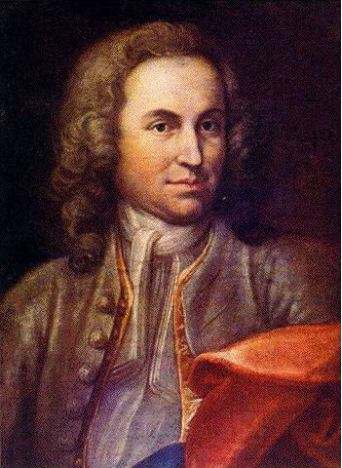
Johann Sebastian Bach
&
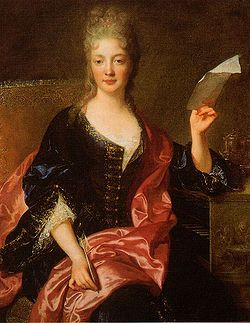
Elisabeth-Claude Jacquet
de la Guerre
· Irene
Roldàn,
harpsichord
· Jeffrey Cohan,
baroque flute
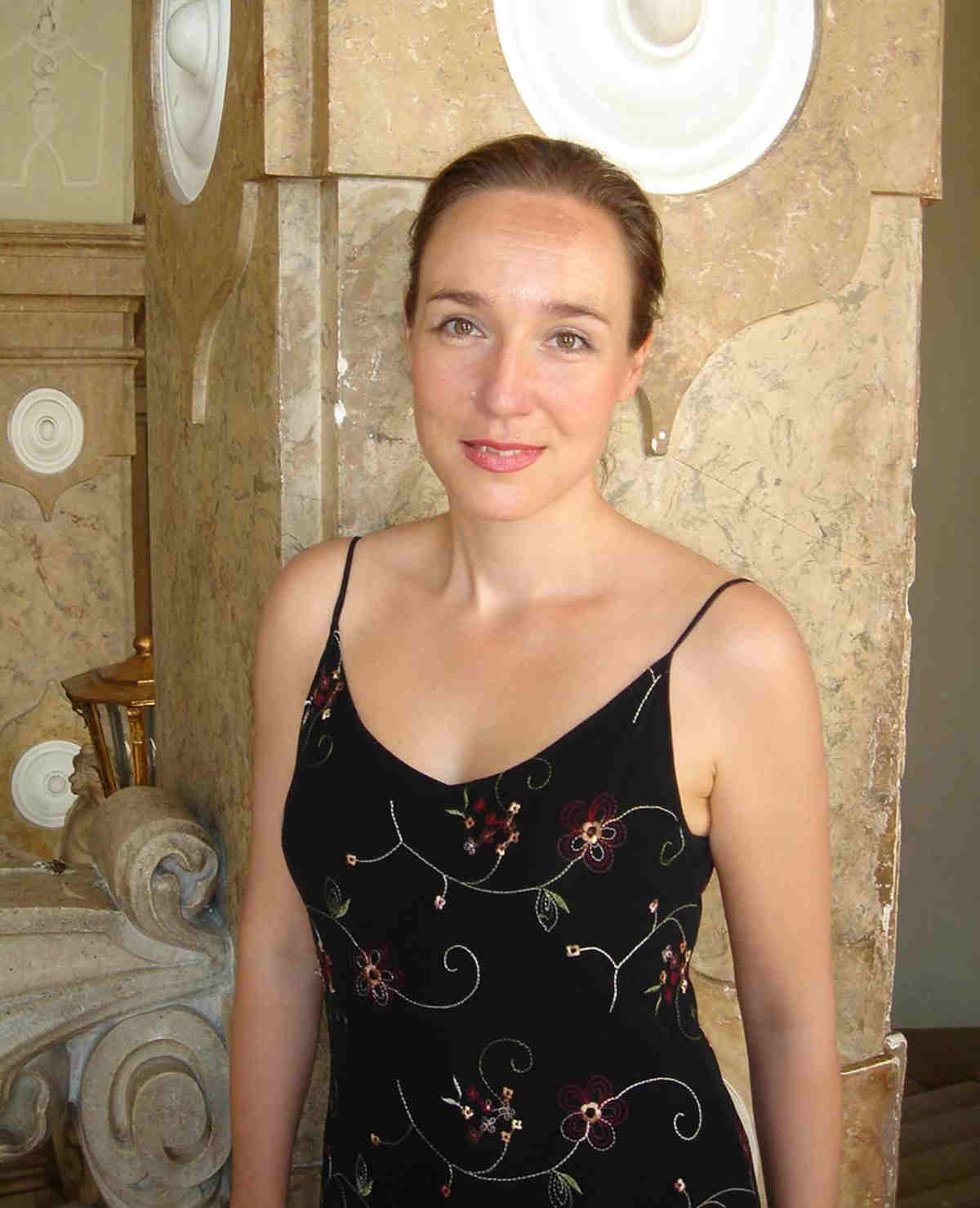
Guest
Spanish harpsichordist Irene
Roldán from Basel, Switzerland
and baroque flutist Jeffrey
Cohan explore connections
between Johann Sebastian Bach
and French composers such as
Élisabeth Jacquet de La Guerre
and Louis Couperin, from whose
innovations Bach was to
benefit. Harpsichord solos
including La Guerre’s Prélude
in D Minor, La Zaïde by
Pancrace Royer, and the Suite
in F Major by Louis Couperin
will complement flute sonatas
in E Major and G Minor by
Johann Sebastian Bach
alongside the performers’
transcriptions of Bach’s
violin sonata in C Minor and
the violin sonata in D Major
by É. Jacquet de La Guerre
Born 20 years before Johann
Sebastian Bach and a favorite
composer of Louis XIV,
Élisabeth Jacquet de La Guerre
made many important
contributions in her
compositions both for solo
keyboard and in the
development of the cantata,
all the while juxtaposing and
integrating the distinct
French and Italian styles,
setting the stage for similar
techniques and forms that Bach
was later to use extensively
and develop further.
Award-winning
harpsichordist Irene
Roldán (www.ireneroldan.com)
was born in southern Spain in
1997. Described by the press
as one of the most prominent
Spanish harpsichordists on the
international scene (ABC
Sevilla), Irene currently
lives and works in Basel,
Switzerland. She gained
international recognition in
2021, when she won first
prize, never previously
awarded in this competition,
as well as the audience prize
at the III. International
Harpsichord Competition «Città
di Milano». In the same year,
her ensemble Flor Galante
secured the first prize at the
IV. International Bach
Competition in Berlin. One
year later, Irene was honored
with the prestigious Bach
Prize and an additional
special award at the XXXIII.
International Bach Competition
held in Leipzig, Germany.
|
|
Thursday,
June
25, 2026
at 7:00 PM:
—BAROQUE IN
TRANSITION: THE TREBLE VIOL
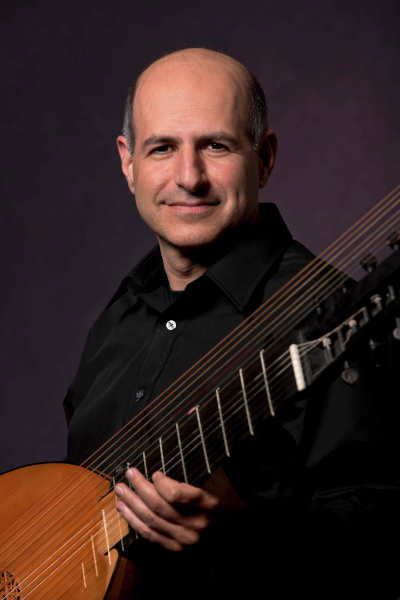
· Annalisa
Pappano,
treble viol
· William Simms,
baroque guitar and theorbo
· Jeffrey Cohan,
baroque and renaissance flutes

 In
Baroque in Transition: The
Treble Viol, our final 2026
program, the transition in
instrumental music as the
Renaissance flowered into
the Baroque through the 17th
century will be explored
through the perspective the
smaller fretted member of
the viola da gamba family in
a diverse selection of 17th
and early 18th-century
Italian, English and French
and German music, alongside
transverse flutes of both
the Renaissance and the
Baroque, and the
17th-century guitar.
The canzona appeared in the
1570's as a more vocally
inspired instrumental form
in contrast to the ricercare
of the renaissance. It
evolved into the familiar
sonata as it exhibited ever
more instrumentally virtosic
colors into the mid 1600’s.
At this time diverging
Italian and French styles
prompted intense
intellectual clashes between
their proponents.
To be represented are early
17th-century Italian
composers Tarquino Merula,
Bartolomé de Selma y
Salaverde, Marco Uccelini,
Giovanni Paulo Cima and
Giovanni Battista
Buonamente, followed by mid
17th-century English
composer Matthew Locke
alongside virtuoso
embellishments for treble
viol by mid-century German
composer Johannes Schop.
Contrasting works by
Frenchman Jean-Baptiste
Lully and Italian violinist
Archangelo Corelli appeared
in the same manuscript (!)
at the court of Louis XIV in
1695 and are to be heard,
performed with baroque
transverse flute, followed a
Suite by early 18th-century
French composer
Louis-Antoine Dornel from
1713, shortly before the
death of Louis XIV and
representing the end of a
musical era, following which
the Italian and French
styles were to be more
commonly integrated.
★
★ ★
|
|
In
1676, Thomas Mace expresses our
musical aspirations: "I have
been more Sensibly, Fervently,
and Zealously Captivated, and
drawn into Divine Raptures, and
Contemplations, by Those
Unexpressible Rhetorical,
Uncontroulable Perswasions, and
Instructions of Musicks Divine
Language."
Sloane
wrote in about 1794 that "There
must be an Order and just
Proportion, Intricacy with
Simplicity in the Component
parts, Variety in the Mass, and
Light and Shadow in the whole,
so as to produce the varied
sensations of gaiety and
melancholy, of wildness and even
surprise and wonder…"
As Thomas Mace says in 1676:
"…When we come to be Masters… we
can command all manner of Time,
at our own Pleasures; we Then
take Liberty for Humour and good
Adornment-sake, to Break Time;
sometimes Faster, sometimes
Slower, as we perceive, the
Nature of the Thing Requires,
which…adds much Grace and Luster
to the Performance."
|
|